We use cookies to help you navigate efficiently and perform certain functions. You will find detailed information about all cookies under each consent category below.
The cookies that are categorized as "Necessary" are stored on your browser as they are essential for enabling the basic functionalities of the site. ...ย
Necessary cookies are required to enable the basic features of this site, such as providing secure log-in or adjusting your consent preferences. These cookies do not store any personally identifiable data.
No cookies to display.
Functional cookies help perform certain functionalities like sharing the content of the website on social media platforms, collecting feedback, and other third-party features.
No cookies to display.
Analytical cookies are used to understand how visitors interact with the website. These cookies help provide information on metrics such as the number of visitors, bounce rate, traffic source, etc.
No cookies to display.
Performance cookies are used to understand and analyze the key performance indexes of the website which helps in delivering a better user experience for the visitors.
No cookies to display.
Advertisement cookies are used to provide visitors with customized advertisements based on the pages you visited previously and to analyze the effectiveness of the ad campaigns.
No cookies to display.
Evergreen State College transformed a significant budget crisis and student protests over reduced lab hours into an opportunity for innovative, data-driven IT leadership.
By adopting Sassafras, Evergreen gained granular, hourly insights into real-world lab usage, validating student concerns while also identifying periods of inactivity for informed decision-making.
This data led to optimized lab hours, decreased operational costs and allowed the college to strategically manage resources, maximize asset utilization and support budget optimization.
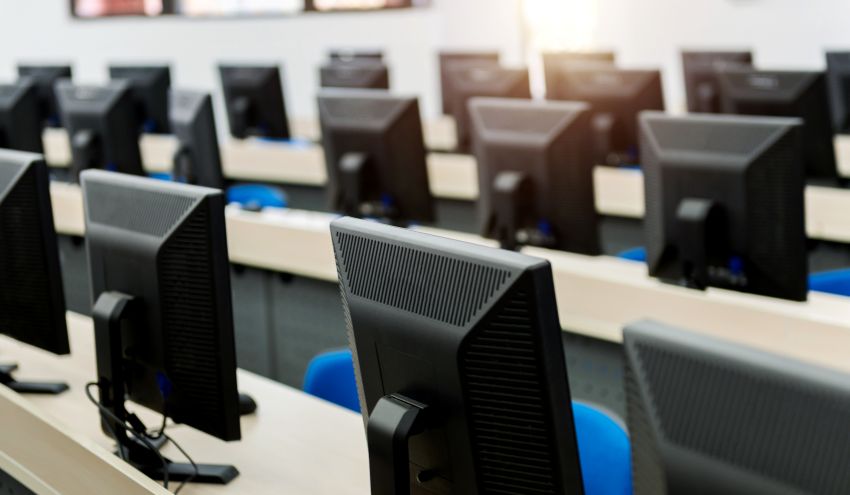
When Evergreen State College lost 43% of its state funding, the institution faced a stark challenge: how to maintain academic excellence while dramatically cutting operational costs. For the IT department, this meant making hard decisions about where to pull back without disrupting student access to critical computing resources.
ย
For years, Evergreen had maintained generous lab hours, including 24/7 availability in some locations. This approach aligned with the collegeโs open-access philosophy, but in the face of budget shortfalls, it became unsustainable. Reducing lab hours offered a clear cost-saving opportunity. But the change triggered backlash.
After the IT team implemented reduced hours, students responded with protests, refusing to leave computer labs after closing times. They argued that the new schedule cut into essential study time which particularly impacted students who lacked personal devices or internet access at home. The protests highlighted a tension between fiscal responsibility and student equity.
ย
To resolve the standoff, Evergreenโs IT leadership realized they needed objective, irrefutable data. Thatโs when they turned to Sassafras, a robust IT Asset Management and Software Asset Management solution, to get the analysis required.
With Sassafras, the college gained the ability to track real-world lab usage at an hourly level across all machines. By applying custom Time Sets to โHistogram Loginโ reports, IT staff could quickly analyze patterns, allowing them to identify when computers were truly in use and correlate usage with location, time of day, and even the specific software accessed.
ย
This historical and real-time insight proved invaluable. It validated some of the studentsโ concerns, showing high demand in certain evening time slots, but it also exposed long periods of inactivity where labs could be closed with minimal impact. Armed with this data, Evergreen was able to engage students in a collaborative dialogue, revising lab schedules to better align with true demand.
Armed with historical and real-time insight, Evergreen was able to engage students in a collaborative dialogue, revising lab schedules to better align with true demand.
Effective lab equipment management is essential for institutions and organizations that rely on computing labs, research facilities, or technology-rich learning environments. Whether in higher education, corporate training centers, or technical schools, maintaining visibility and control over lab equipment ensures that critical assets remain available, efficient, and cost-effective.
ย
At its core, lab equipment management refers to the processes and systems used to monitor, maintain, allocate, and optimize physical computing resources, such as desktops, laptops, monitors, printers, specialized peripherals, and even networked lab infrastructure. It goes far beyond basic inventory tracking; itโs about making data-driven decisions that align equipment availability with user demand, academic scheduling, and long-term strategic goals.
What began as a crisis evolved into an opportunity. In the face of budget pressure, Evergreen State College didnโt just survive, they built a model for responsible, responsive IT leadership that other institutions can follow.
ย
Evergreenโs success story is about more than saving money, itโs about making smarter decisions that align with real-world needs. By using Sassafras to bring clarity to resource usage, the IT team avoided unnecessary cuts, preserved equity, and improved overall service delivery.
Notifications
